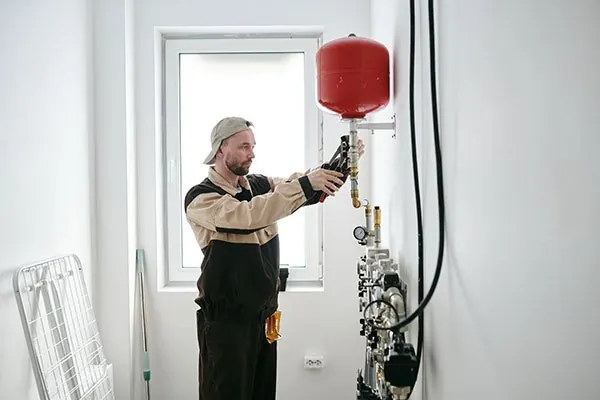
What a hot water system replacement involves
Hot water system replacement means taking out a failed or ageing unit and installing a new one, connected to your water, power or gas, with the valves and safety devices the plumbing standard requires. Hot Water System Sydney arranges independent local licensed plumbers and gasfitters to quote on these jobs across Sydney. You get a written price before any work starts.
A typical replacement goes like this. The plumber isolates water and power or gas, drains the old unit, disconnects it and removes it. The new unit goes in on a suitable base or wall bracket. Water connections are made with new valves where needed, the relief valve drain is connected to discharge somewhere safe and visible, and a tempering valve is fitted where required. Gas or electrical connections are made by the appropriately licensed person. The system is filled, purged of air, started and tested, and the old unit leaves with the plumber.
Like for like, or a different system?
There are two kinds of replacement, and the difference matters for time and price.
Like for like. The same fuel and similar size in the same spot. This is the quickest option and the one most people need when the old unit has failed and the household wants hot water back. Even so, it is worth confirming the size still suits the household.
A change of system. A different fuel, a different type, or a different position. Common examples in Sydney:
- Electric storage to heat pump, to cut running costs. Needs outdoor space with airflow and a position that respects noise limits. See heat pump and solar hot water.
- Gas storage to gas continuous flow, so the household does not run out. The gas meter and pipe must be big enough. See gas hot water.
- Electric to gas, where mains gas is already connected. Needs a gas line run to the new position.
- Adding solar, where there is unshaded north-facing roof space.
A change of system may cost more on the day but less over the following ten years or more. The quote should show you both numbers, or at least explain the trade-off.
Getting the size right
Undersizing is the most common mistake in Sydney replacements. A household that has grown, added a bathroom or installed a big shower head can easily outrun the tank it had ten years ago. Oversizing has its own cost: a big tank keeps more water hot all day, which uses energy.
For storage systems, sizing starts with the number of people and how many showers run close together. For continuous flow, it is about how many outlets need hot water at the same time and how much the temperature has to rise on a cold winter morning. Tell the plumber how the household actually uses hot water, not just how many bedrooms there are.
When to replace before it fails
Most replacements happen in a hurry, because the old system has stopped or started leaking. If yours is still working but getting old, planning ahead gives you time to compare systems and quotes. Signs worth acting on:
- Rust-coloured water from the hot taps only.
- Water pooling around the base of the tank, or a constantly dripping relief valve.
- Running out of hot water sooner than you used to.
- Rumbling or popping noises from a storage tank.
- A compliance plate showing an installation date well over a decade ago.
None of these alone proves the unit is finished, but together with age they are a good reason to get a quote.
Compliance and safety
In NSW, installing a hot water system is plumbing work, and connecting a gas appliance is gasfitting work. NSW Fair Trading licenses both. We ask the contractors we work with to hold the licences and insurance the job needs — ask to see them before work starts. When the job is done, ask for the certificate of compliance and keep it with the warranty.
Storage tanks need to keep water hot enough to control bacteria such as Legionella, which is why the tank temperature is set high and a tempering valve brings the delivered temperature down for bathrooms. Do not lower the tank thermostat to save energy without asking a plumber first.
Prices
Replacement prices vary with the system type, capacity, access and how much of the surrounding plumbing changes. Our hot water system cost guide has 2026 planning bands. If your system has just failed, the guide to the day your hot water fails covers what to do while you wait.